

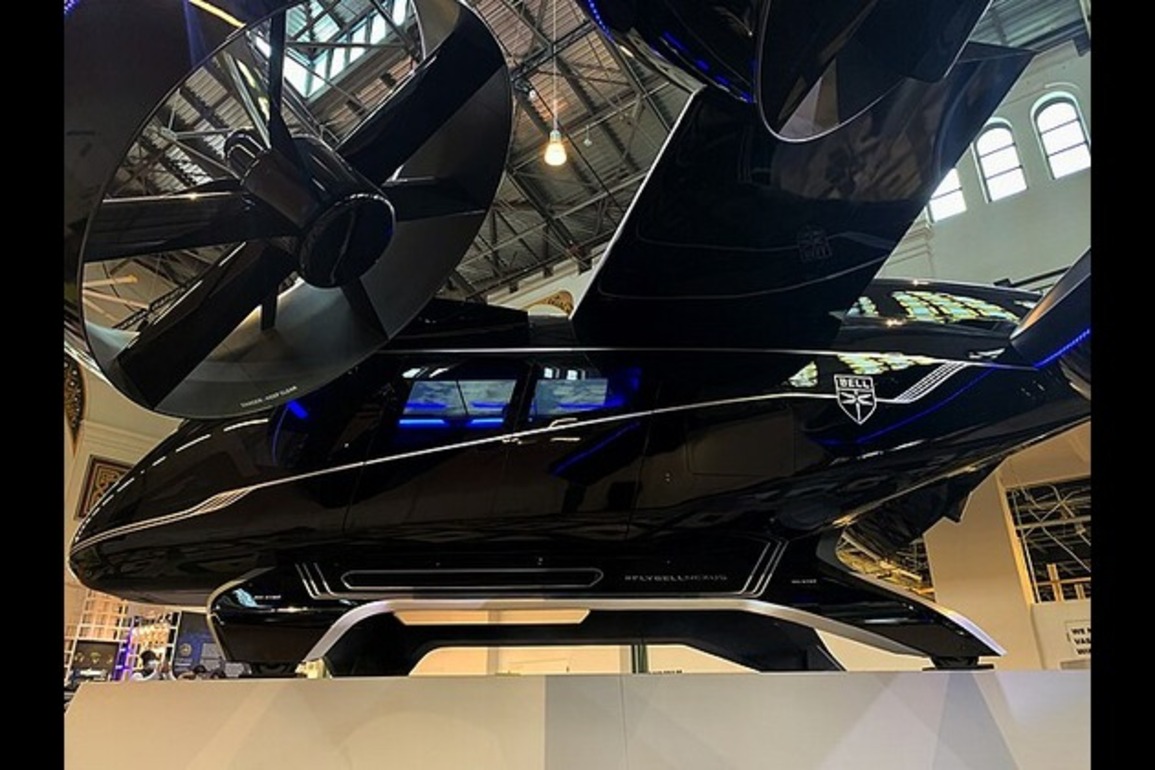
HONG KONG: China's vision of a future filled with pilotless air taxis and drone-powered services is taking shape across its southern tech hubs, but the path to commercial flight is proving far more complicated than the glossy demonstrations suggest.
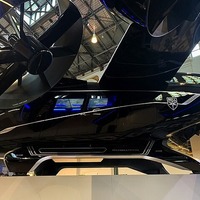
In Guangzhou, an oval-shaped unmanned craft from flying taxi maker EHang hovers above a riverside innovation zone, part of ongoing tests of small passenger eVTOL aircraft — machines once confined to movie scenes. Nearby in Shenzhen, drone delivery has already become a tourist attraction. Polish visitor Karolina Trzciańska and her friends ordered drinks by phone just to watch a drone descend with their bubble tea. "It was super fun," she said.
The momentum reflects Beijing's support for what it calls the "low-altitude economy," a sector covering airspace below 1,000 meters that reached 506 billion yuan ($70 billion) in turnover last year. Researchers expect that figure to swell to 3.5 trillion yuan ($490 billion) by 2035.
Guangdong province, home to DJI, which controls an estimated 70% of the global commercial drone market, remains the center of gravity. Other major players include EHang, SF Express's drone unit Phoenix Wings, and XPENG's ARIDGE flying car division. Local governments are competing to build infrastructure, from flight service stations to rooftop takeoff pads, while Shenzhen has offered 15 million yuan ($2.1 million) in awards to companies earning passenger eVTOL certifications.
China's Civil Aviation Administration has already granted certificates allowing EHang to offer commercial passenger flights. The pilotless eVTOL can reach speeds of 130 kph (81 mph) with a range of 30 kilometers (19 miles). Commercial sightseeing flights are the likely first step, said EHang vice president He Tianxing, who expects routes to take shape over the next five years.
Yet even with government backing, the industry faces structural challenges. Battery capacity remains a major bottleneck, limiting flight times to as little as 20–30 minutes, said Guo Liming of Skyevtol, whose one-seat eVTOL costs about $100,000. Safety concerns are also rising. In September, two XPENG aircraft collided during a rehearsal, with one catching fire on landing. XPENG said no one was hurt, but the incident prompted another expo to cancel flying demonstrations.
Still, XPENG is pushing ahead, touting a six-wheeled ground vehicle paired with a detachable aircraft and claiming more than 7,000 global orders for its "Land Aircraft Carrier." A trial sightseeing route in Dunhuang, a Silk Road heritage site, is planned for next July.
Despite China's leadership in drone manufacturing, domestic adoption has lagged due to tightly controlled airspace. Less than one-third of low-altitude airspace was available for general aviation in 2023, with far fewer aerodromes than in the U.S., according to researcher Zhang Xiaolan. That's prompting some companies to eye Southeast Asia for faster commercial opportunities.
Policymakers are now easing restrictions, and draft revisions to China's civil aviation law aim to formalize management of low-altitude operations. Analysts expect limited commercialization, mostly tourism and industrial uses, by around 2030.
China's unified state–industry–academic push gives it advantages, experts say. But technological hurdles, public acceptance and regulatory caution mean progress will be uneven.
"The future for the low-altitude economy is bright," said Chen Wen-hua of Hong Kong Polytechnic University. "However, the road leading to that bright future might be treacherous."